
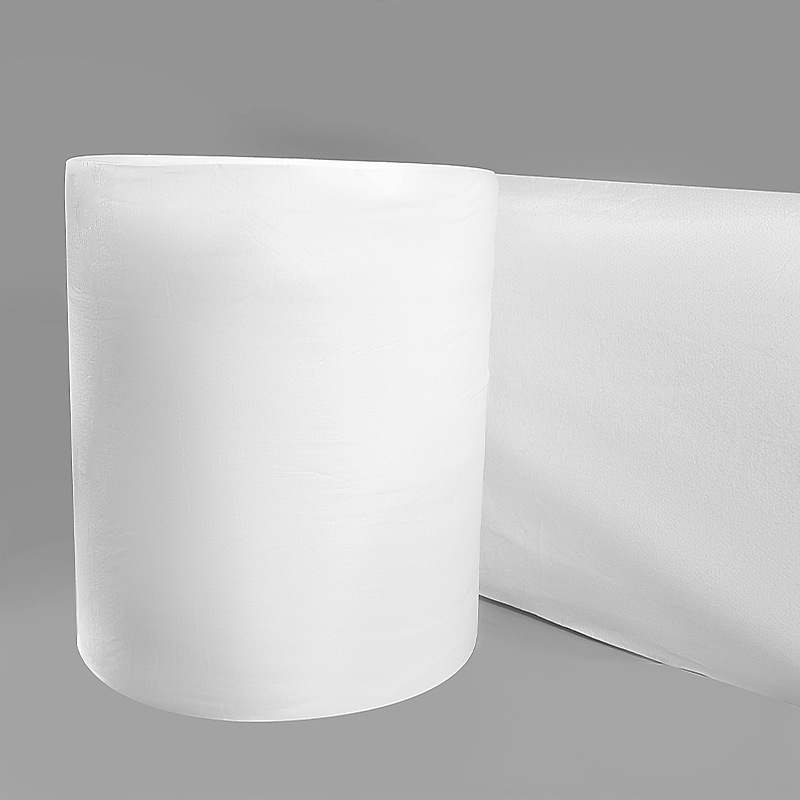
Spunbonded Nonwoven Fabric
Spunbond nonwoven fabric, with high cost-effectiveness as its core, combines good strength, breathability, corrosion resistance, and functional modification, making it suitable for use in disposable and engineering products across multiple fields.
main usage Medical and health care: disposable mask outer fabric, protective clothing fabric, surgical gown, cap, shoe cover, medical bed sheet, isolation gown. Sanitary products: sanitary napkins, diaper topsheet/backsheet, panty liners, making water-repellent backsheets or hydrophilic topsheets. Packaging industry: non-woven shopping bags, storage bags, gift packaging, dust covers. Geotechnical construction: geotextiles, road subgrade reinforcement, seepage prevention and isolation, slope protection and drainage. Home textiles: sofa lining, bedding pads, dustproof covers, disposable bedsheets and pillowcases. Agriculture: crop insulation and cold-proof cloth, weed-proof cloth, seedling covering cloth. Others: Filter materials, automotive interiors, mask fabrics, disposable protective gear.
Features
- ✓ High production efficiency, low cost, capable of large-scale continuous production, and high cost-effectiveness.
- ✓ It boasts excellent breathability, lightweight, soft texture, high strength, and better tensile strength compared to spunlace nonwoven fabric, making it less prone to breakage.
- ✓ It has good processing performance and can be compounded, dyed, and printed, allowing for various functional modifications.
- ✓ It has good chemical stability, is resistant to acid and alkali, and is not prone to decay. Some of its raw materials (PP polypropylene) are recyclable.